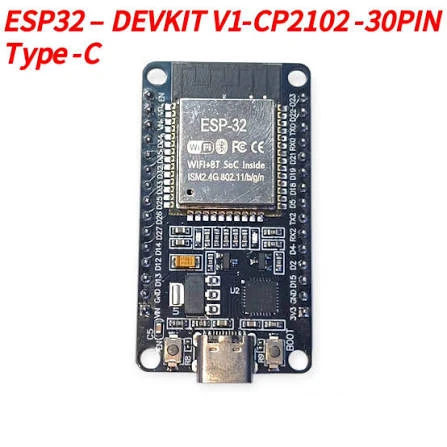
ESP32 DevKit V1 30-Pin CP2102 USB Type-C Wi-Fi Bluetooth Development Board
The ESP32 DevKit V1 30-Pin CP2102 USB Type-C Development Board is a versatile microcontroller development board designed for IoT applications, embedded systems, wireless communication, and smart electronics projects. Powered by the ESP32 microcontroller, this board combines Wi-Fi and Bluetooth connectivity with GPIO pins, making it suitable for students, engineers, makers, and electronics enthusiasts in Bangladesh.
Featuring a CP2102 USB-to-UART converter, the board supports serial communication and firmware uploading through a compatible USB Type-C connection. It can be programmed using the Arduino IDE, ESP-IDF, and other compatible ESP32 development environments.
The ESP32 DevKit V1 is ideal for building smart home automation systems, wireless sensor networks, IoT monitoring devices, robotics, environmental monitoring systems, and remote-control applications. Its 30-pin layout provides access to multiple GPIO pins and peripheral interfaces, depending on the specific board design.
Whether you are learning microcontroller programming or developing a connected electronic product, the ESP32 DevKit V1 offers an accessible platform for prototyping and experimentation. It is particularly useful for Bangladeshi students, university engineering projects, robotics teams, IoT developers, and electronics hobbyists looking for an affordable Wi-Fi and Bluetooth development solution.
Important: Specifications and pin assignments can vary between manufacturers. Check the exact board layout and ESP32 variant before connecting external hardware.
Specifications:
Specification | Details |
|---|---|
Product Type | ESP32 Development Board |
Model | ESP32 DevKit V1 |
Pin Configuration | 30 Pins |
Main Controller | ESP32, commonly ESP32-WROOM-32 |
USB Interface | USB Type-C |
USB-to-Serial IC | CP2102 |
Wireless Connectivity | 2.4 GHz Wi-Fi and Bluetooth |
Operating Logic Voltage | 3.3V |
Programming Interface | USB-to-UART |
GPIO | Multiple digital input/output pins |
Communication Protocols | UART, SPI, I²C, I²S |
Analog Features | ADC; DAC and touch sensing on supported GPIOs |
Programming Platforms | Arduino IDE, ESP-IDF |
Applications | IoT, robotics, automation, wireless sensors |
Related Products


 Featured
Wholesale